


Saving Africa’s Wetlands: Rwanda’s Blueprint for Conservation
- Fola Folayan
- Feb 1
- 5 min read
African wetlands are among the continent’s most vital ecosystems, yet they remain some of its most endangered. These landscapes support human livelihoods, sustain wildlife, regulate water systems, and play a critical role in climate resilience. Despite their importance, wetlands across Africa continue to face degradation driven by pollution, encroachment, over harvesting, and weak conservation frameworks.
According to the National Geographic Resource Library, a wetland is an area of land either covered by water or saturated with water. This water may come from groundwater seeping up from aquifers or springs, from nearby rivers and lakes, or from seawater in coastal regions affected by tides. These waterlogged ecosystems act as natural buffers against flooding and erosion by absorbing excess rainwater. They also support high biological productivity, providing habitat for aquatic life and sustaining staple foods such as rice and fish that millions of Africans rely on.
Across the continent, however, wetlands are disappearing at an alarming rate. The consequences are far reaching, from declining biodiversity and compromised water quality to increased food insecurity. Africa is home to several globally recognized wetlands, including four UNESCO World Heritage sites: Banc d’Arguin National Park in Mauritania, Djoudj National Bird Sanctuary in Senegal, Ichkeul National Park in Tunisia, and iSimangaliso Wetland Park. Beyond these, dozens of lesser known wetlands remain ecologically and economically indispensable to the countries that host them.
Against this backdrop, Rwanda stands out as a rare example of deliberate and coordinated wetland restoration. Despite continent wide challenges such as limited conservation education and funding, Rwanda has invested in policies, enforcement, and community engagement that have allowed several wetlands to recover and, in some cases, thrive.
A prominent example is Nyandungu Eco Tourism Park in Kigali. In 2016, the Government of Rwanda, through the Rwanda Environment Management Authority, launched the Nyandungu restoration project. The initiative invested 4.5 billion Rwandan francs to address biodiversity loss, reduce pollution, halt degradation, and develop eco tourism. Since then, the former wetland has been transformed into a protected ecological park that serves both educational and recreational purposes while offering a model for wetland rehabilitation nationwide.
As Park Manager Peace Mugabo explains, “This is the first project out of 6 wetlands to be rehabilitated in Kigali City so it will serve as a blueprint for the others to follow”. She adds, “This wetland rehabilitation project is important because of flood control”.
The impact has been tangible. “There used to be lots of flood around here but conserving the wetlands has helped to control the flooding. The wetland has filtration plants that filter the polluted water which provide clean water for people in the community, Our recreational services have also benefited not just the immediate community but the entire city. It is not unusual on weekly days to see people coming to Nyandungu Eco-park for picnics, cycling activities and even the elderly coming here to exercise and enjoy the freshness of nature”.

Beyond flood control, Nyandungu has become a center for environmental education and botanical research. Dr. Joseph Mvukiyumwami, a botanist and professor since 1982, studies traditional medicinal plants cultivated within the park. According to him, Africa holds immense medicinal plant diversity, much of it still under researched. At Nyandungu, he highlights species such as Euphorbia Hirta used to treat asthma, Plantago Palmata for conjunctivitis and laxative effects, and Cassia Floribunda for treating intestinal worms. More than 17,000 plant species have been introduced in the park, including over 55 indigenous tree species.
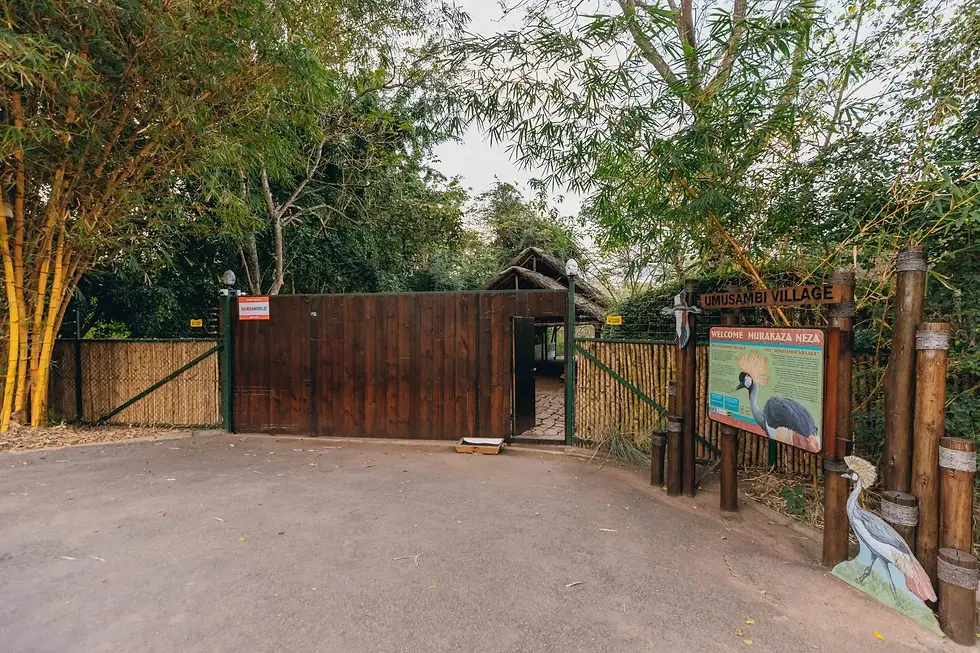
Elsewhere in Kigali, conservation efforts extend beyond wetlands to endangered wildlife. At Umusambi Village, restoration work focuses on habitat rehabilitation, biodiversity recovery, and species protection. One of its most visible conservation successes is the protection of the Grey Crowned Crane, known locally as Umusambi in Kinyarwanda.
The Grey Crowned Crane is easily identified by the distinctive crown of stiff golden feathers on its head and its tall, slender build suited to wetland habitats. The species is native to several African countries, including Rwanda, Uganda, the Democratic Republic of Congo, Tanzania, Kenya, and South Africa. Despite its wide range, the bird has become endangered due largely to human interference.
Christian Mugabe, Director of Conservation Enterprise at Umusambi Village, explains that in traditional Rwandan society, the Grey Crowned Crane was often seen as a symbol of wealth. This perception fueled attempts to domesticate the birds, with some owners cutting their wings to prevent escape. The practice caused severe injuries and contributed to a sharp population decline.
Umusambi Village has since rescued and provided sanctuary for more than 50 Grey Crowned Cranes recovered from the illegal pet trade. Mugabe explains the rehabilitation process: “After rehabilitation, we release the cranes that are able to fly into the national park to thrive in their natural habitat. But we keep the ones unable to fly here. Some free flying cranes also come here to visit and in the process, the breed to with our cranes and reproduce. When the chicks are hatched and able to fly in two months, they are also released to fly out.” He says.
He adds insight into the species’ social behavior: “Cranes are monogamous. They usually breed with one partner until one of them dies. Incubating an egg is also a joint effort. Both make and female cranes sit on the egg and it takes 28 days for the egg to hatch”.


Botanist and researcher Winnie Kyamujara says the project was driven by urgency. “We wanted a safe place where we can put them to rehabilitate them so they can re-breed and multiply. We work on cranes because they are endangered and we wanted to see if we could increase the population of cranes in Rwanda. We did a census before we started and we discovered that in the entire country, we had just over 500 Grey Crowned cranes. Some of the them have been able to re-breed, and their offsprings can fly and come back. The amazing thing is that some free range cranes who do not live within the park, fly in and breed with the cranes we are rehabilitating. This has really helped to increase the population.“ she explains.
Umusambi Village’s conservation work extends beyond cranes. The park is home to 136 bird species and supports habitat restoration initiatives that include planting indigenous trees across different regions. These efforts contribute to biodiversity recovery while helping mitigate climate change. Marshland restoration is another key focus, with preserved wetlands helping collect rainwater that supports farming during the dry season. As Mugabe notes, “The marsh is a home to several small animals; toads, frogs, lizards, small insects and birds that help keep the balance in the ecosystem”.
Community engagement underpins both Umusambi Village and Nyandungu Eco Tourism Park. Umusambi operates as a social enterprise, creating jobs, hosting researchers, educating young people about conservation, and attracting tourists and bird watchers. Kyamujara emphasizes the community dimension: “We work with the community by hiring casual workers who help us restore the park and plant native trees. We also employ permanent staff who are paid on a monthly basis. The restorative work we do at Umusambi has also helped educate the local community about the benefits of conservation and how the environment benefits, these lessons are in turn passed down to the children thus, educating the next generation and getting everyone involved”.
Together, Nyandungu and Umusambi reflect Rwanda’s broader conservation strategy, one that links environmental protection with education, livelihoods, and long term sustainability. Across much of Africa, wetlands have been neglected or misused due to poor resource management, limited public awareness, and inconsistent leadership. Rwanda’s experience demonstrates that with political will, clear policy direction, and community involvement, wetlands can be restored and protected.
As climate change intensifies and pressure on natural resources grows, Rwanda’s model offers a compelling lesson. Preserving wetlands is not only an environmental imperative but also a pathway to addressing food security, water access, and climate resilience across the continent.
-------------------------------------------------------------------------------------------------------
This report was first published in 2022 as part of the Kwita Izina Conservation Tour Project

Comments